The Hidden Cost of AI Workflow Redesign No One Puts on the Roadmap
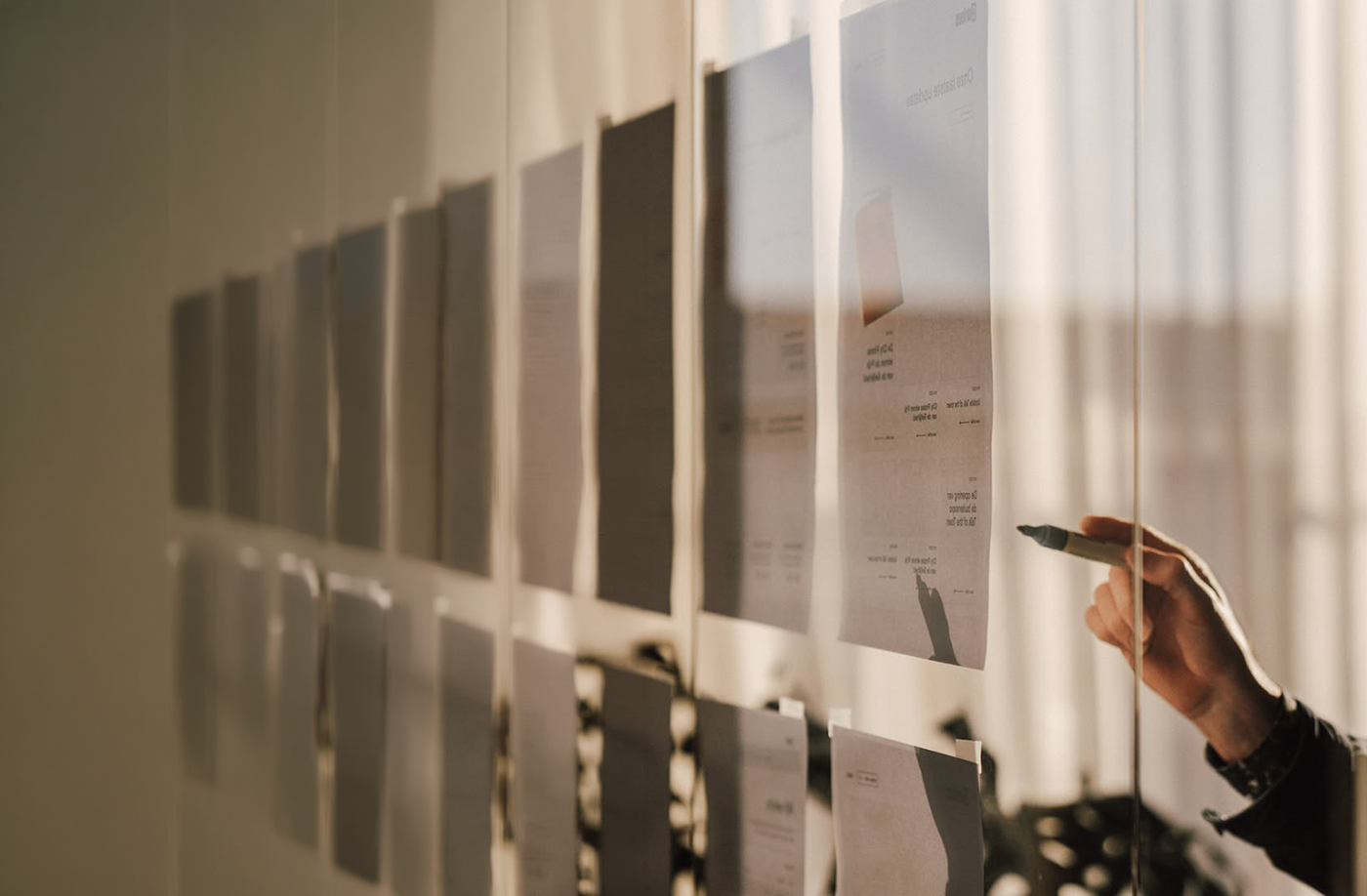
Every AI workflow redesign we’ve been part of has the same good twenty minutes. Someone draws the future state on a whiteboard, an AI-first version of a process that used to take days, and the room comes alive. People talk over each other. Someone says “imagine if we could just…”, and for twenty minutes it’s the best conversation in the building.
That part is genuinely fun, and it should be. It’s also the cheapest part of the project. If it’s the only part that gets real attention, what comes out the other side is a well-built agent bolted onto a team nobody actually redesigned.
The exciting part of AI workflow redesign is also the cheapest
Most AI workflow redesign projects spend their energy in the same place: deciding what the agents will do. Which steps get automated, which data feeds which decision, where the confidence thresholds sit. That work matters, and it’s genuinely hard.
But a redesigned workflow doesn’t just remove steps from an existing team. It creates a different kind of team. The people who remain aren’t doing the old job with a few tasks lifted off it. They’re doing a job that didn’t exist before the redesign, with different skills, a different rhythm, and different accountability. None of that gets designed in the north-star conversation, because that conversation is about what the agents will do. What happens to the humans still standing next to them usually gets left for later, filed under a line like “people will focus on more complex work” and revisited once the technology is built.
It rarely goes well when it’s revisited that late. By then the org chart is set, people have already heard rumours about what’s changing, and the redesign has to retrofit a human layer onto a system that was never built with one in mind.
What AI workflow redesign actually changes for your team
Take a Know Your Customer (KYC) process, the kind every bank runs to check who it’s actually doing business with before opening an account. Done manually, a single check can take two to ten days and cost £25 to £50, and the outcome depends heavily on which analyst happened to pick it up that day.
In a reference design we use at Experience Haus to pressure-test this approach end to end, the AI system doesn’t replace the analyst who reviews these cases. It changes what lands on their desk. Where they used to see every case, they now see only the ones that genuinely need a person: the ones that fall outside a defined confidence threshold, or involve a pattern the system hasn’t encountered before.
The number of cases drops. The difficulty per case goes up, because every one that reaches them has already failed to resolve on its own. That’s a different job, and it needs different support: a review interface that shows exactly why a case escalated instead of a generic dashboard, clear authority to override the system, and a documented way for those overrides to feed back into how the system improves.
That’s one role. A fuller redesign usually surfaces several more: someone who monitors the system’s overall performance rather than individual cases, someone who still handles the moments a customer or regulator expects a person to be involved in, someone accountable for the system as it drifts and needs retuning over time. Not every workflow needs all of these roles, but most need at least two, and deciding which ones is a design question, not an HR afterthought.
A startup rebuilds a role from scratch, in the room
A few months ago we were working with a startup mapping their customer journey end to end, from first contact through to renewal. The exciting bit came fast. An ideal future state, an AI-first version of most of the flow, whiteboard full of arrows in twenty minutes.
The harder bit came after. Working out what the team on the other side of that flow actually does now.
Four roles ran the process at the time. Two of them barely changed in the new version. One changed almost completely, and the founder didn’t have a name yet for what it should become. We built that role together in the room, right there at the whiteboard. It went from someone processing applications to someone who owns the judgement calls the agent system flags, plus the handful of relationships that still need a person on the other end. A genuinely different job, and everyone on the team could see it coming rather than finding out about it after launch.
The workshop stayed just as energised for doing that work. It left with a plan people could actually stand behind.
Why the human layer belongs in the first conversation, not the last
Naming these roles early means naming whose job gets smaller, who has to be told, who owns the awkward conversation with their own team. That’s a harder discussion than “imagine if we could just”, so it gets deferred, sometimes for a week, sometimes for the whole project, until it turns up as a delivery problem instead of a design decision.
It also affects which workflow you should build first. A workflow that looks like the easy win in the vision conversation can carry a second budget line nobody costed: the human reorganisation underneath it. Naming that cost at the same time as the technical one is what lets the vision survive contact with the actual organisation, rather than stalling three months in when someone finally asks what happens to their team.
At Experience Haus, we build this into the design phase directly rather than treating it as change management to sort out later. Once we know what the AI agents in a workflow are doing, we run a session naming, role by role, who’s left: who catches the exceptions, who owns the quality of the output, who holds the judgement calls that still need a person, who’s accountable for the system as it runs. We call this the New Human Layer, and running it as a real design exercise, at the same table where the north star gets drawn, is what turns “people will focus on more complex work” from a hopeful sentence into a plan you can actually staff, train, and support. [LINK: Experience Haus AI workflow design services]
The real job
AI workflow redesign is an organisation design project as much as a technology one. The agents are the part that gets the airtime. The team they leave behind is the part that decides whether the project actually works.
If you’re mapping an AI-first version of a workflow and haven’t yet designed what your team looks like on the other side of it, that’s exactly the conversation worth having before you build.
Talk to Experience Haus about redesigning your workflow, human layer included.